


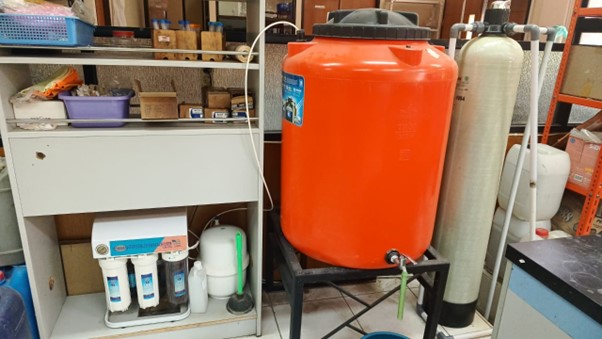
Water filters are designed to produce pure, mineral-free water for pollen and spore sample preparation, preventing minerals or dissolved substances from interfering with analysis. This reduces the risk of damage or changes to pollen/spore structure and avoids contamination by microorganisms, preventing microbial growth that could affect the sample.
- The water filter system generally consists of several stages:
- Initial filtration removes coarse particles and dirt using a mechanical filter. At this stage, water from the tap passes through a sediment filter to remove large particles like sand, mud, or debris, usually using a multi-level filter with pore sizes ranging from large to small (e.g., 20 microns to 5 microns).
- Next, activated carbon filtration absorbs organic substances, odors, and tastes.
- The following stage is reverse osmosis, which separates pure water from contaminants using a semi-permeable membrane.
- Once finished, the water is stored in a clean container, ready for use.
- The sediment filter in the device is typically replaced every 8-12 months.