



PROFILE
BOARD OF STUDY PROGRAM
LEARNING OUTCOME
CURRICULUMS
STUDENT'S ACHIEVEMENT
ADMISSION
DIGITAL ARCHIVES
PROFILE
OUR VISSION
“Becoming a geological educational institution that responds and encourages development geological resources through mastery of theoretical concepts knowledge in the field and geological skills with orientation to environmental sustainable, as well as strive for the development of internationally competitive institutions”
OUR MISSIONS
Organizing geology education that can graduate a qualified reliable geologist, character, cultured and scientific reasoning, and also able to compete in the international level
Organizing geology education that can graduate geology who are able to obtain or build a jobs, and able to developed into a geologist professional
Conducting basic sciences and applied geological research for the benefit of national development namely energy, minerals, engineering geology, hydrogeology, geology environment, geosciences, and geology entrepreneurship
Applying the results of basic sciences and applied geological research for the benefit of community, government and stakeholders
AUTONOMOUS PROFESIONAL PROFILE
No | Profile | Description |
1 | Junior Expert in Energy Exploration Geology | Graduates are qualified to work in the exploration of oil and natural gas, renewable energy, energy conservation, and efficient extraction processes. |
2 | Junior Expert in Mineral Exploration Geology | Graduates can work in the exploration of mineral resources, both metallic and non-metallic, for determining mineralization models, discovering and developing metallic and non-metallic resource potentials, industrial materials, and gemstones. |
3 | Junior Expert in Engineering Geology | Graduates are equipped to perform field investigations, design, foundation, and slope stabilization; site characterization; construction and remediation of waste disposal or contaminated sites; and geological hazard assessments for civil engineering, mining, or environmental development. |
4 | Junior Expert in Hydrogeology and Environmental Geology | Graduates can work in groundwater exploration and contamination investigations, basic physical analysis, and disaster mitigation for regional planning and development. |
5 | Junior Earth Science Researcher | Graduates can work in the geosciences field, particularly addressing contemporary issues in earth science. |
6 | Entrepreneur Geology | Graduates are capable of pursuing careers in the development of geological entrepreneurship. |
GRADUATE’S OUTCOME
Attitude
Leadership & Networking
SKILL & Creativity
Knowledgeable
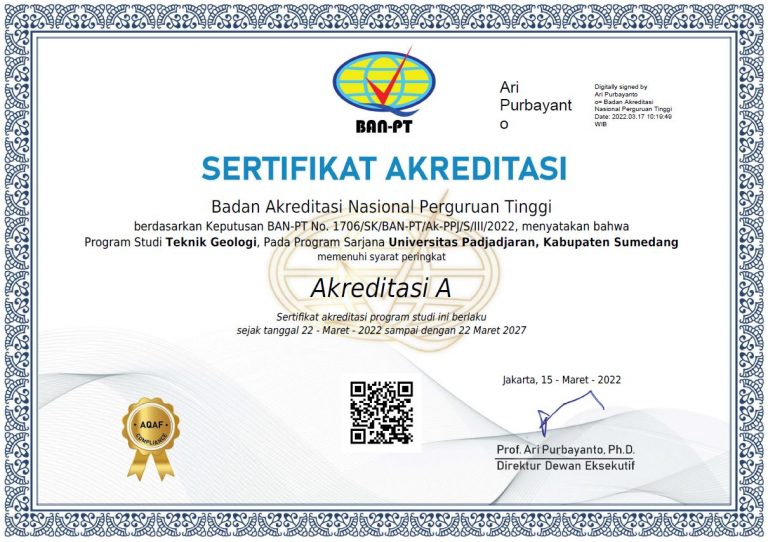
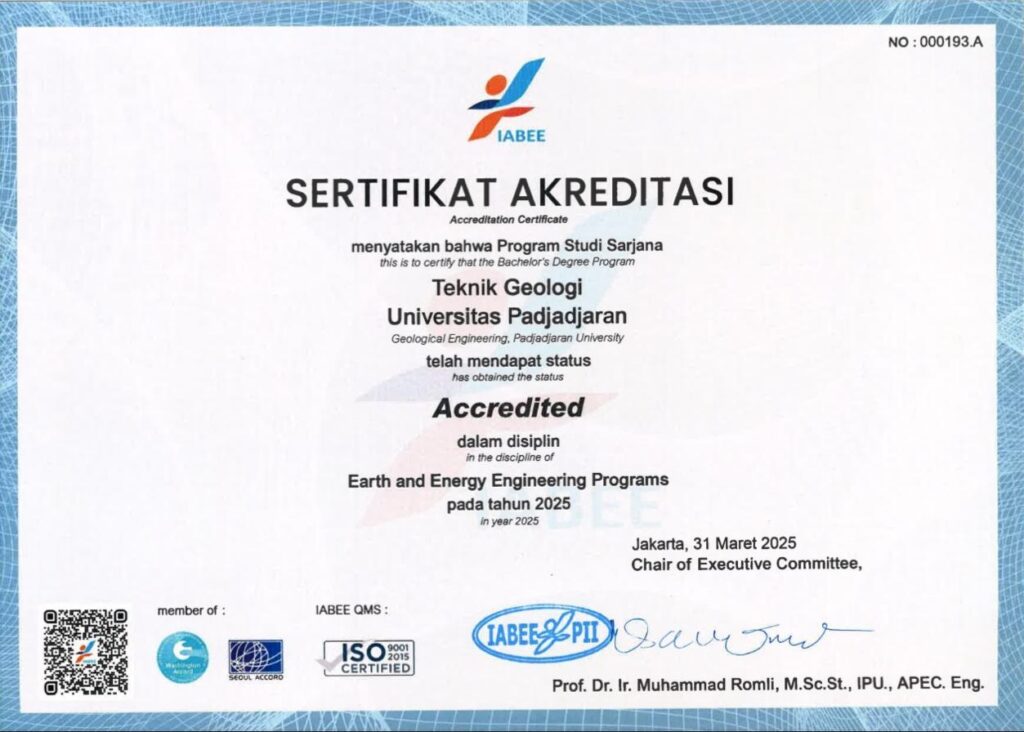
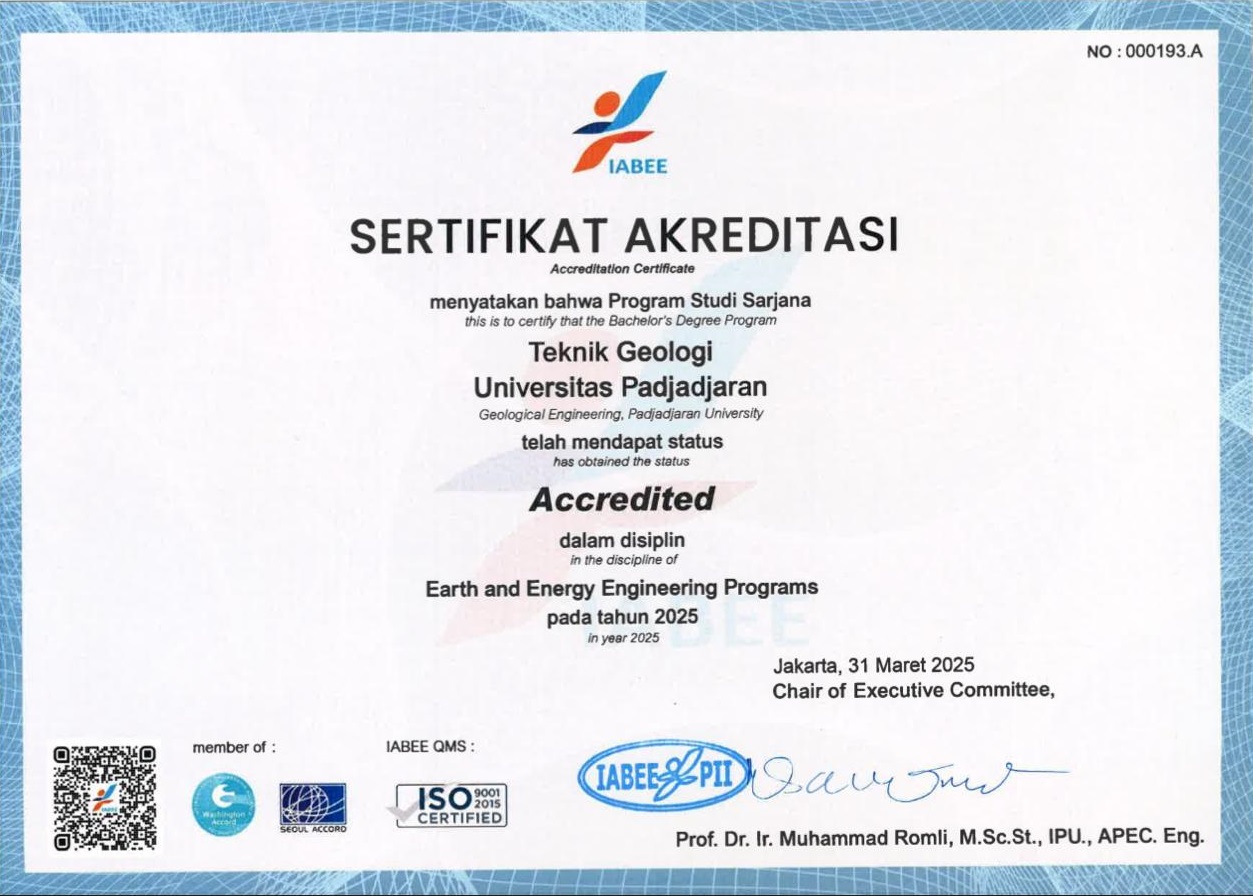
ACCREDITATION

CONTACT
Geological Engineering Undergraduate Program
1st Floor, Deanery Building (Gedung Dekanat)
Jl Ir. Soekarno Km. 21 Jatinangor, Sumedang 45363, West Java, Indonesia
Email: [email protected]
Prof. Dr. Ir. Emi Sukiyah, M.T.
Taufik Rustikadara, S.A.P (+62 858-1745-8544)
BOARD OF STUDY PROGRAM
BACHELOR DEGREE OF GEOLOGICAL ENGINEERING STUDY PROGRAM BOARD
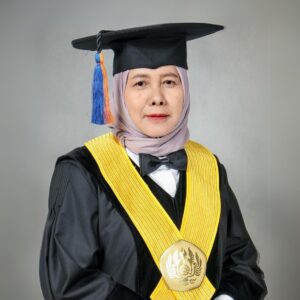
Head of Geological Engineering Bachelor Study Program
Prof. Dr. Ir. Emi Sukiyah, M.T.

Secretary of Geological Engineering Bachelor Study Program
Taufik Rustikadara, S.A.P
LEARNING OUTCOME
No | Parameters | Learning Outcome Target |
1 | Attitude (S1) | Ability to demonstrate professionalism, responsibility, and ethical behavior. |
2 | Attitude (S2) | Possessing a sense of nationalism and respect for cultural and opinion diversity. |
3 | Knowledge (P1) | Having a broad understanding of current issues relevant to geological engineering, exploration, geological disaster mitigation, and environmental management. |
4 | Knowledge (P2) | Ability to apply geological science to develop solutions that address specific needs, considering public health, safety, and welfare, as well as global, social, cultural, economic, and environmental factors. |
5 | General Skills (KU1) | Ability to communicate effectively, both orally and in writing. |
6 | General Skills (KU2) | Ability to work individually or collaboratively in multidisciplinary and multicultural teams, fostering a collaborative and professional environment while executing geological engineering tasks. |
7 | General Skills (KU3) | Having an appreciation for entrepreneurship and understanding the need for lifelong learning. |
8 | Specific Skills (KK1) | Ability to identify, formulate, analyze, design, evaluate, and solve geological problems by applying engineering principles, science, and mathematics. |
9 | Specific Skills (KK2) | Proficiency in employing methods, techniques, and tools—including hardware and software—for scientific research, exploration, geological disaster mitigation, geological engineering, and environmental management. |
10 | Specific Skills (KK3) | Capability to accomplish tasks in various technical, economic, environmental, social, and legal contexts, including effective and flexible time management. |
11 | Specific Skills (KK4) | Ability to design components, systems, and/or processes to meet specific needs within realistic constraints, including legal, economic, environmental, social, political, health and safety, sustainability aspects, and to recognize and/or utilize the potential of local and national resources with a global perspective. |
12 | Specific Skills (KK5) | Ability to conduct fieldwork and/or laboratory analyses in adherence to HSE (Health, Safety, and Environment) regulations to solve geological engineering problems in line with technological advancements. |
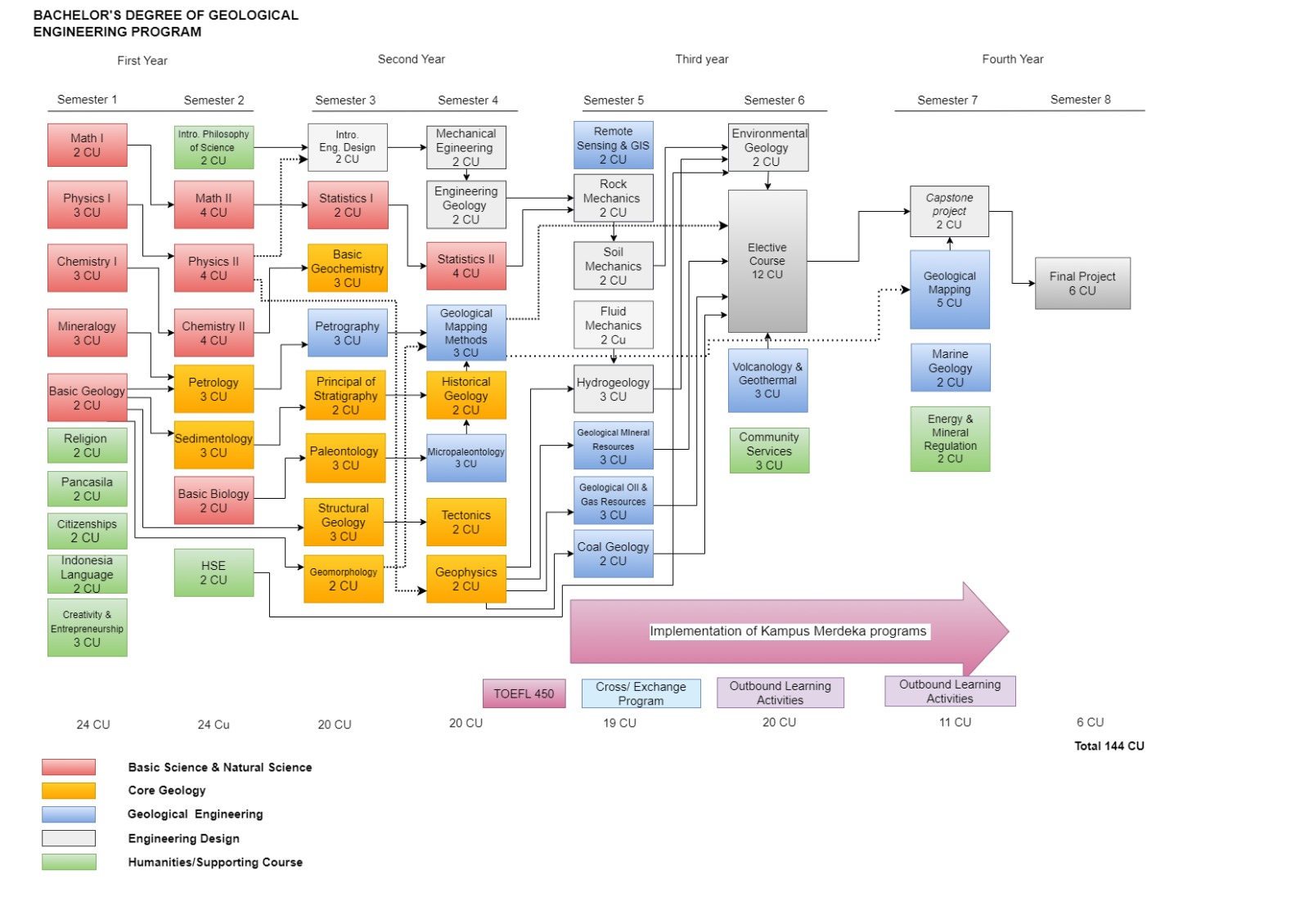
CURRICULUMS
CREDIT SYSTEM LEARNING
Students determine the study load to be taken
PROBLEM BASED LEARNING
Problem based learning, Role play, Simulation, Discussion
CLASS MEETING
Face to face learning, Practice in Laboratories, Tutorial Study
FIELD PRACTICE
The activity to applied the geological knowledge that receive in the class for field problem study
The learning methods in each course (table 2) generally consist of:
1. Guidance/Tutorial
2. Group Discussion
3. Experience-Based Learning (Experiential Learning / EXL)
4. Discovery Learning
5. Problem Based Learning (PBL)
6. Project Based Learning
7. Collaborative Learning
8. Cooperative Learning
9. Simulation
In the 2020 curriculum, the Geological Engineering Faculty of Padjadjaran University designed the Merdeka Campus system which is regulated according to the curriculum recommended by the Indonesian Ministry of Education and Culture.
The implementation of lectures must meet the credit score requirements that have been regulated in accordance with government regulations. In the curriculum there are several courses that must be taken by students as well as selective courses that can add to the student’s credit score.
Compulsory Courses
1st Semester
No | Code | Course Name | Credits |
1 | UNP10.101 | Religion | 2 (2-0) |
2 | UNP10.111 | Pancasila (State Ideology) | 2 (2-0) |
3 | UNP10.121 | Study of Citizenship | 2 (2-0) |
4 | UNP10.105 | Creativity and Entrepreneurship (OKK) | 3 (0-3) |
5 | UNX10.016 | Bahasa | 2 (2-0) |
6 | 271012010001 | Physic I | 2 (2-0) |
7 | 271012010002 | Basic Chemistry | 2 (2-0) |
8 | 271012010003 | Mathematic I | 2 (2-0) |
9 | 271012010004 | Basic Geology | 2 (1-1) |
10 | 271012010006 | Mineralogy | 3 (2-1) |
Credits Total | 22 | ||
2nd Semester
No | Code | Course Name | Credits |
1 | 271012010005 | Mathematic II | 4 (3-1) |
2 | 271012010007 | Physic II | 4 (3-1) |
3 | 271012010008 | Introduction to Philosophy of Science | 2 (2-0) |
4 | 271012010009 | Chemistry | 4 (3-1) |
5 | 271012010010 | Petrology | 2 (2-0) |
6 | 271012010011 | Sedimentology | 3 (2-1) |
Credits Total | 20 | ||
3rd Semester
No | Code | Course Name | Credits |
1 | 271012020001 | Principles of Stratigraphy | 2 (1-1) |
2 | 271012020002 | Basic Geochemistry | 3 (2-1) |
3 | 271012020003 | Structural Geology | 3 (2-1) |
4 | 271012020004 | Petrography | 3 (2-1) |
5 | 271012020005 | Introduction to Engineering Design | 2 (2-0) |
6 | 271012020006 | Paleontology | 2 (2-0) |
7 | 271012020007 | Geomorphology | 2 (1-1) |
8 | 271012020008 | Statistics I | 2 (2-0) |
Total Credits | 20 | ||
4th Semester
No | Code | Course Name | Credits |
1 | 271012020009 | Tectonics | 2 (2-0) |
2 | 271012020010 | Historical Geology | 2 (2-0) |
3 | 271012020011 | Engineering Geology | 2 (1-1) |
4 | 271012020012 | Mechanical of Materials | 2 (2-0) |
5 | 271012020013 | Geological Mapping Methods | 3 (1-2) |
6 | 271012020014 | Geophysics | 2 (2-0) |
7 | 271012020015 | Statistics II | 4 (3-1) |
8 | 271012020016 | Micropaleontology | 3 (2-1) |
Total Credits | 20 | ||
5th (Merdeka Belajar)
No | Code | Course Name | Credits |
1 | 271012030001 | Petroleum Geology | 3 (2-1) |
2 | 271012030002 | Geology and Mineral Resources | 3 (2-1) |
3 | 271012030003 | Hydrogeology | 3 (2-1) |
4 | 271012030004 | Coal Geology | 2 (1-1) |
5 | 271012030005 | Soil Mechanics | 2 (1-1) |
6 | 271012030006 | Rock Mechanics | 2 (1-1) |
7 | 271012030007 | Remote Sensing and Geographic Information System | 2 (1-1) |
8 | 271012030008 | Fluid Mechanics | 2 (1-1) |
Selective course based on interest 1* | 2 | ||
Credits Total | 21 | ||
6th Semester (Merdeka Belajar)
No | Code | Course Name | Credits |
1 | 271012030009 | Environmental Geology | 2 (1-1) |
2 | 271012030010 | Vulcanology and Geothermal Geology | 3 (2-1) |
3 | P10A.606 | Community Services | 3 (0-3) |
4 | Field of Study Concentration (4-6 MK, @ 2 – 3 SKS) | 12 | |
Credits Total | 20 | ||
7th Semester (Merdeka Belajar)
No | Code | Course Name | Credits |
1 | 271012040001 | Geological Mapping | 5 (1-4) |
2 | 271012040002 | Capstone Project | 2 (1-1) |
3 | 271012040003 | Regulation of Geological Resources and Environmental | 2 (2-0) |
4 | 271012040004 | Environmental Science | 4 (4-0) |
5 | 271012040005 | Marine Geology | 2 (1-1) |
Selective Course Geology Technic 2 Course @ 2 SKS | 4 | ||
Credits Total | 19 | ||
8th Semester
No | Code | Course Name | Credits |
1 | 271012040008 | Final Project | 6 (0-6) |
Credits Total | 6 | ||
Total for all Credits: 146 SKS
Elective Course for Study Concentration
Jr. Energy Exploration Concentration
No | Code | Course Name | Credits |
1 | 271012030201 | Oil and Gas Exploration | 2 (1-1) |
2 | 271012030202 | Coal Exploration | 2 (1-1) |
3 | 271012030203 | Geology Geothermal Exploration | 2 (1-1) |
4 | 271012030204 | Geochemistry Geothermal Exploration | 2 (1-1) |
5 | 271012030205 | Sedimentary Basin Analysis | 2 (1-1) |
6 | 271012040107 | Renewable Energy Exploration and Energy Conservation | 2 (1-1) |
Jr. Geology Technic Concentration
No | Code | Course Name | Credits |
1 | 271012030401 | Geomechanics | 3 (2-1) |
2 | 271012030402 | Slope Stability Analysis | 3 (2-1) |
3 | 271012030403 | Geotechnic | 3 (2-1) |
4 | 271012030404 | Engineering Geology Modelling | 3 (1-2) |
Jr. Mineral Exploration Concentration
No | Code | Course Name | Credits |
1 | 271012030301 | Mineral Resources Exploration | 2 (1-1) |
2 | 271012030302 | Alteration Petrology | 2 (1-1) |
3 | 271012030303 | Thermodynamic | 2 (1-1) |
4 | 271012030304 | Ore Microscope | 2 (1-1) |
5 | 271012030305 | Industrial Mineral and Precious Stone | 2 (1-1) |
6 | 271012030306 | Basement Petrology and Vulcanic | 2 (1-1) |
Jr. Hydrogeology and Environmental Geology Concentration
No | Code | Course Name | Credits |
1 | 271012030501 | Area Development Geology | 2 (1-1) |
2 | 271012030502 | Hazard Mitigation | 2 (1-1) |
3 | 271012030503 | Mining Groundwater Technic | 2 (1-1) |
4 | 271012030504 | Oil Groundwater Technic | 2 (1-1) |
5 | 271012030505 | Building Groundwater Technic | 2 (1-1) |
6 | 271012030506 | Introduction to AMDAL | 2 (1-1) |
Jr. Earth Science Research Concentration
No | Code | Course Name | Credits |
1 | 271012030601 | Development of Earth Science | 2 (1-1) |
2 | 271012030602 | Earth Science, Atmosphere, and Planets | 2 (1-1) |
3 | 271012030603 | Global Climate Change | 2 (1-1) |
4 | 271012030207 | Quaternary Stratigraphy Analysis | 2 (1-1) |
5 | 271012040147 | Applied Paleontology | 2 (1-1) |
6 | 271012030606 | Geology of Indonesia | 2 (1-1) |
Geology Entrepreneurship Concentration
No | Code | Course Name | Credits |
1 | 271012030701 | Geology of Indonesia | 2 (1-1) |
2 | 271012030702 | Geodiversity, Geoheritage, and Geopark | 2 (1-1) |
3 | 271012030703 | Economical Geology | 2 (1-1) |
4 | 271012040119 | Oil Upstream Business | 2 (1-1) |
5 | 271012040122 | Technology and Entrepreneurship Management | 2 (1-1) |
6 | 271012030706 | Innovation and Business Development | 2 (1-1) |
Elective Course of Geological Engineering
No | Code | Course Name | Credits |
1 | 271012030704 | Quantitative Geomorphology | 2 (1-1) |
2 | 271012030705 | Quaternary Geology | 2 (1-1) |
3 | 271012040101 | Historical Geology Analysis | 2 (1-1) |
4 | 271012040102 | Structural Geology Analysis | 2 (1-1) |
5 | 271012040103 | Borehole Logging Analysis | 2 (1-1) |
6 | 271012040104 | Stratigraphy Analysis | 2 (1-1) |
7 | 271012040105 | Applied Micropaleontology | 2 (1-1) |
8 | 271012040106 | Applied Remote Sensing | 2 (1-1) |
9 | 271012040108 | Geophysical Geothermal Exploration | 2 (1-1) |
10 | 271012040109 | Applied Geophysics | 2 (1-1) |
11 | 271012040110 | Oil and Gas Geochemistry | 2 (1-1) |
12 | 271012040111 | Oil and Gas Geomechanics | 2 (1-1) |
13 | 271012040112 | Geology Hazard | 2 (1-1) |
14 | 271012040113 | Hazard Mitigation | 2 (1-1) |
15 | 271012040114 | Palynology | 2 (1-1) |
16 | 271012040115 | Groundwater Modelling | 2 (1-1) |
17 | 271012040116 | Modelling and Mineral Resource Calculation | 2 (1-1) |
18 | 271012040117 | Petrogenesis | 2 (1-1) |
19 | 271012040118 | Metamorphic Petrology | 2 (1-1) |
20 | 271012040120 | Stratigraphy Seismic | 2 (1-1) |
21 | 271012040121 | Stratigraphy Sequence | 2 (1-1) |
22 | 271012040123 | Biostratigraphy | 2 (1-1) |
23 | 271012040149 | Ancient Environmental Analysis | 2 (1-1) |
Open Elective Course for Study Program Transfer
No | Code | Course Name | Credits |
1 | 271012030702 | Geodiversity, Geoheritage, dan Geopark | 2 (1-1) |
2 | 271012040112 | Geology Hazard | 2 (1-1) |
3 | 271012040005 | Environmental Geology | 2 (1-1) |
STUDENT'S ACHIEVEMENT
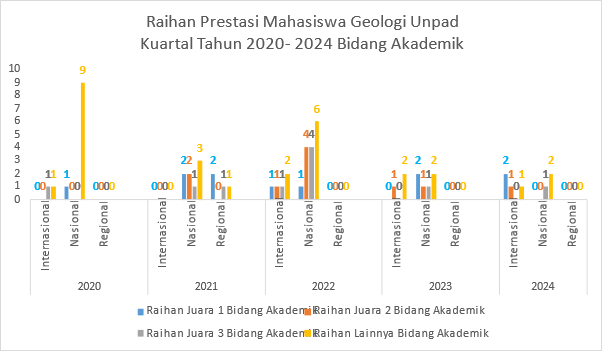
ACADEMICS ASPECT
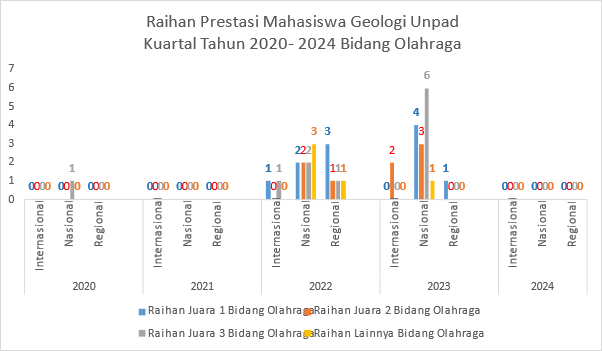
SPORTS ASPECT
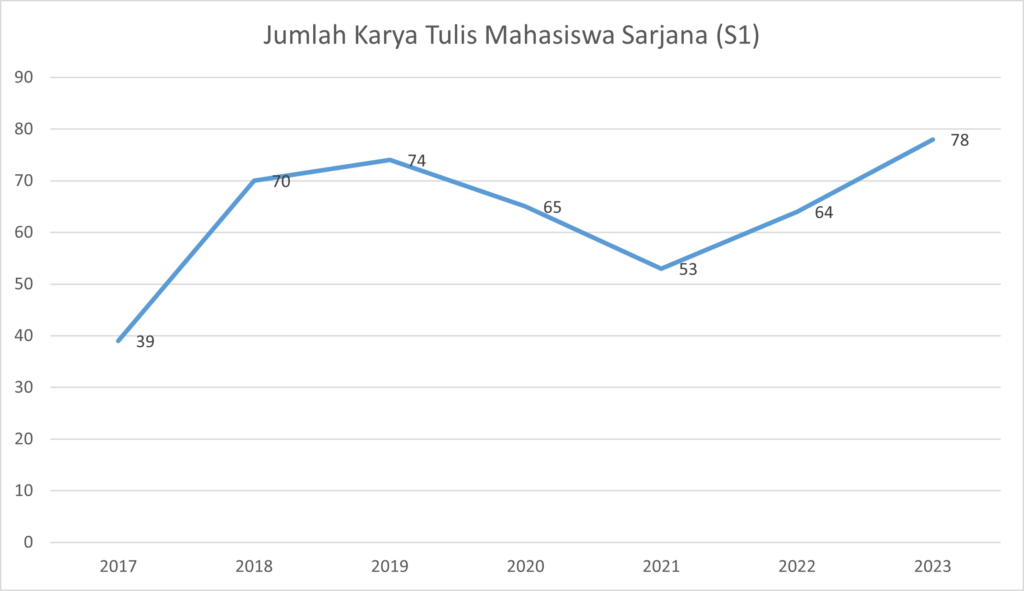
SCIENTIFIC WORK
ADMISSION
LTMPT
The Higher Education Entrance Test Institute (LTMPT) is an institution that administers higher education entrance tests for prospective new students, this institution is under the auspices of the Ministry of Education and Culture of the Republic of Indonesia. As the only institution that administers standardized higher education tests in Indonesia, LTMPT is the first step for selected prospective students and students in reaching their goals. LTMPT positions itself as the best and foremost institution for administering higher education entrance tests in Indonesia and has a specific goal of implementing credible, fair, transparent, flexible, efficient and accountable higher education entrance tests.
Higher Education Entrance Test Institute
SMUP UNPAD
Through this website you can register yourself to take part in the University of Padjadjaran Entrance Selection (SMUP), the Academic Ability Test (TKA) exam organized by the Psychology Center of the University of Padjadjaran, both for the purposes/requirements of SMUP or not, the English Language Proficiency Test (TKBI) which organized by the Language Center of the Faculty of Cultural Sciences, Universitas Padjadjaran, both for SMUP needs/requirements or not, as well as submitting a Letter of Acceptance (LoA) for prospective S3 (Doctoral) level SMUP participants. For prospective SMUP participants, before registering, please carefully read all the information listed on the http://smup.unpad.ac.id page.
Unpad Independent Admission Test
DIGITAL ARCHIVES